Sabah is emerging as a key player in Malaysia’s oil and gas industry. Discover what this growth means for skills development, training, and future talent opportunities.
Malaysia’s oil and gas industry is entering a new phase — and Sabah is at the centre of this transformation.
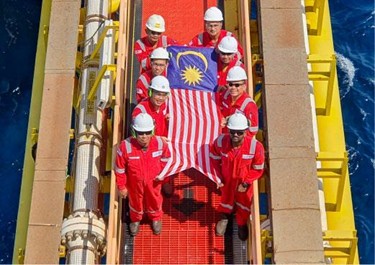
Recent developments highlighted by PETRONAS show that Sabah is playing an increasingly important role in the country’s oil and gas ecosystem, particularly in the Oil & Gas Services and Equipment (OGSE) sector.
This shift is not just about resources, it is about capability, talent, and industry readiness.
1. Rapid Increase in Local Industry Participation

Sabah’s oil and gas ecosystem has seen significant growth in recent years.
This signals a strong demand not only for businesses, but also for skilled workforce across multiple disciplines.
2. Strengthening the OGSE Ecosystem in Malaysia
The Oil & Gas Services and Equipment (OGSE) sector is a key pillar of Malaysia’s economy.
With over 3,500 oil and gas-related businesses nationwide, the industry requires a strong support ecosystem — from engineering to project management and operations.
Sabah’s expansion strengthens Malaysia’s position as a regional energy hub, while increasing demand for:

While the industry is growing, a key question remains:
Do we have enough skilled talent to support this growth?
Many organisations in the oil and gas sector face:
This is where training institutions must step in, not as traditional educators, but as industry talent developers.

The oil and gas industry today is no longer purely technical — it is multi-disciplinary and evolving.
Key skill areas now include:
Technical & Operations
Digital & Data Skills
Industry Soft Skills
Without structured training, even qualified individuals may struggle to perform effectively.
At FIIDA, we recognise that industry growth must be matched with talent development.
As Malaysia’s oil and gas sector expands — especially in regions like Sabah — FIIDA plays a role in preparing individuals and organisations through:
Industry-Relevant Training Programmes
Digital Integration for Industry
Workforce Upskilling for Companies
Our focus is not just training, but producing talent that can immediately contribute to industry operations.
Opportunities for Students, Freelancers & SMEs
Sabah’s growth is not limited to large corporations — it creates opportunities across all levels:
Students
Freelancers
SMEs
Malaysia’s energy sector is evolving, and Sabah is a key part of that future.
But growth alone is not enough.
To fully unlock this potential, Malaysia needs:
Sabah’s expanding role in Malaysia’s oil and gas industry is a powerful signal:
The future of the industry depends not only on resources, but on people. For Malaysia to remain competitive, we must invest in:
At FIIDA, we are committed to bridging this gap, ensuring that talent grows at the same pace as industry.